
I became an academic in part from a concern that prevailing innovation prescriptions were degrading companies' R&D capability. The key breakthrough was a reliable measure of R&D capability: RQ (short for research quotient). Because RQ has an economic foundation, it predicts the growth and market value from R&D, and identifies the optimal level of R&D.
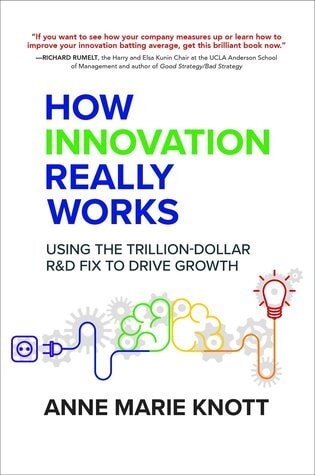
The concern turned out to be valid — companies' RQs have declined 65% over the past few decades. My goal is to restore companies' RQs and revive economic growth. The book, How Innovation Really Works, documents insights from two NSF-funded studies about how to do that.

executives
resources
- How Innovation Really Works (2017) serves as a final report for practitioners from two National Science Foundation (NSF) studies linking companies' R&D practices to their RQs
- My Harvard Business Review articles amplify and update research in the book
- Posts to my online Forbes column are brief comments on current issues related to innovation

investors
When I began working with companies to improve their R&D, I got pushback: there's no way we can do that — our investors would kill us. That triggered parallel efforts to educate investors about RQ. They have become a powerful force for company adoption of higher RQ practices.
resources
policymakers
Innovation is the primary engine of growth. Unfortunately US growth is stagnant, because R&D productivity has declined dramatically since the mid-1980s. I believe the decline stems in part from innovation policy, which tends to focus on research (done principally by universities and government labs), rather than development (done principally by companies). This is true even though 70% of R&D is performed by companies. I hope to shift innovation policy toward greater consideration of corporate R&D.
resources
- Today's Inflation is Comparable to the 1973 Oil Crisis (February 2022)
- This Year's Shift To Capitalization May Reduce R&D Investment (January 2022)
- You Can't Jumpstart a Dead Battery (June 2019)
- 2019 NSF ERC Planning Grant Workshop (October 2019) Measuring Value of R&D
- Why The Tax Cuts And Jobs Act (TCJA) Led To Buybacks Rather Than Investment (February 2019)
- National Academies GUIRR Roundtable (June 2017) Beyond Patents